Research Highlight from Aisa: Jurassic Flight‑less Bird Rewrites Early‑Avialan Evolution
Chinese palaeontologists have reported a new avialan species Yuezhuornis yangyuanensis from the Late‑Jurassic Zhenghe Fauna in Fujian, southeast China, published in Nature. Weighing around 821 g, this ancient creature provides solid evidence that some earliest‑branching birds abandoned flight for terrestrial predation, challenging the long‑standing view that early‑bird evolution was driven mainly by adaptations for powered flight.
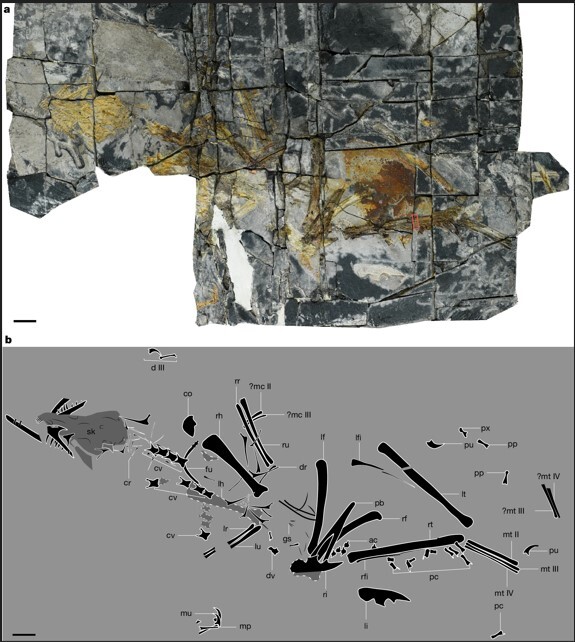
Fig 1 a,b, Photograph (a) and interpretive line drawing (b) of Y. yangyuanensis.
Yuezhuornis shows remarkable mosaic anatomy. Its skull bears troodontid‑like dental features, and its foot retains the hyper‑extendable raptorial second toe typical of deinonychosaurs. Meanwhile, its pelvis and hind limbs show diagnostic avialan traits. Its forelimbs are strikingly short, with the humerus shorter than the femur. Morphometric analyses place its limb proportions within the morphospace of living ground‑dwelling birds, confirming a flight‑free, carnivorous terrestrial lifestyle.
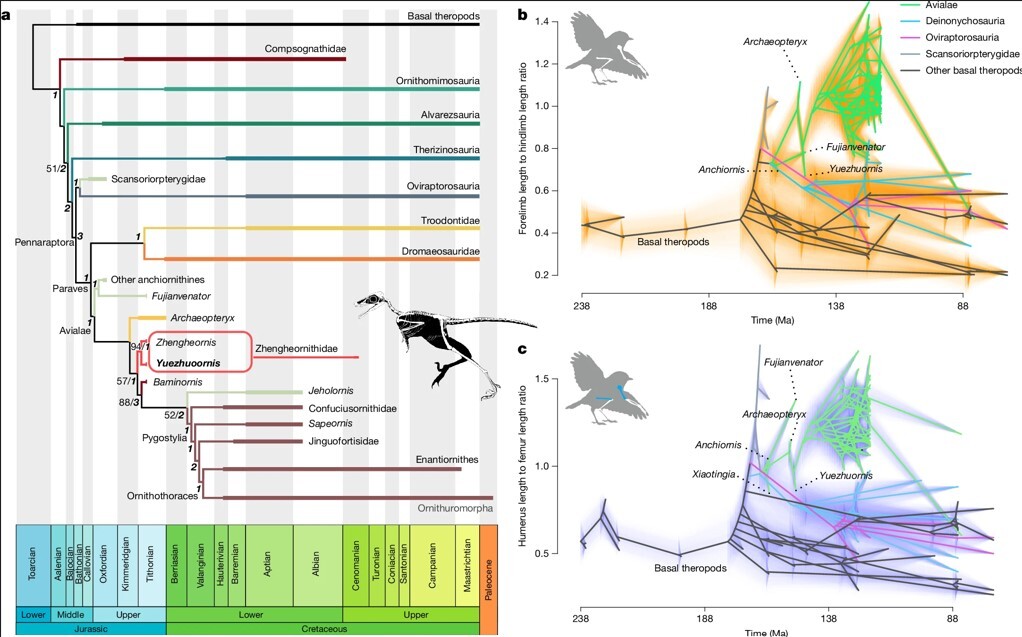
Fig. 4: Phylogenetic position of Y. yangyuanensis and forelimb evolution across the dinosaur-bird transition.
Phylogenetic work places Yuezhuornis in the newly‑erected family Zhengheornithidae, more crown‑ward than Archaeopteryx. The Zhenghe Fauna preserves diverse co‑existing early avialans: the ground‑running Yuezhuornis, long‑limbed wader Fujianvenator, and flyer Baminornis. This reveals that avialans rapidly occupied varied ecological niches right after their origin. The bird body‑plan did not evolve in a straight line toward better flight; instead, multiple evolutionary pathways, including flight loss, were exploited early in avian history.
————
References
Xu, L., Wang, M., Lin, G. et al. Jurassic flightless bird reveals early ecological diversity of avialans. Nature 658, 690–697 (2026).https://doi.org/10.1038/s41586-026-10972-z
Attachment Download:
